

 Current location:
NEWS INFORMATION
Custom Die Casting Services: From Prototype to Volume Production
date:2026-08-27 16:26:38 click:102
Custom die casting projects follow a well-worn path: design review, tooling, sampling, and then mass production. Buyers who understand that path get better parts with fewer surprises. This article walks through each stage of a typical custom die casting project with an OEM or ODM manufacturer, so you know what to expect and what to demand at every step.
The Custom Project Flow
A typical project starts with your drawing and 3D model. The manufacturer reviews the design, quotes tooling and piece price, and if you agree, builds the die. Trial shots come next, followed by first-article inspection against your drawing. Once samples are approved, production starts, with quality checks throughout. The whole cycle for a simple part can take four to eight weeks. Complex housings with slides and inserts run longer, so plan your schedule around that reality. The schedule also depends on how quickly you return feedback on samples and drawings; every week of delay in review adds a week to the delivery date.
Design for Manufacturability Review
The first thing a good supplier does is review your design, not to find fault, but to find cost. They look for draft issues, uneven wall thickness, features that are hard to cast, and tolerances that are tighter than necessary. Their suggestions might include adding a rib, changing a corner radius, or moving a parting line. Take these seriously. Design for manufacturability feedback routinely cuts 10 to 20 percent off tooling and piece cost, and it improves quality at the same time.
Prototypes Before Tooling
If you need parts before committing to production tooling, there are options. Soft tooling, a simple lower-cost die, can produce a few hundred parts in the production material. Machined samples from aluminum or zinc stock verify fit and function, though they skip the cast structure. For quick visual checks, 3D-printed patterns show geometry but not material properties. Choose based on what you are validating: geometry, fit, or material behavior. Each method answers a different question at a different price. A common practical route is to start with machined samples for fit testing, then go straight to production tooling, skipping the soft tooling stage entirely if the volumes justify it.
Tooling Build and First Article Inspection
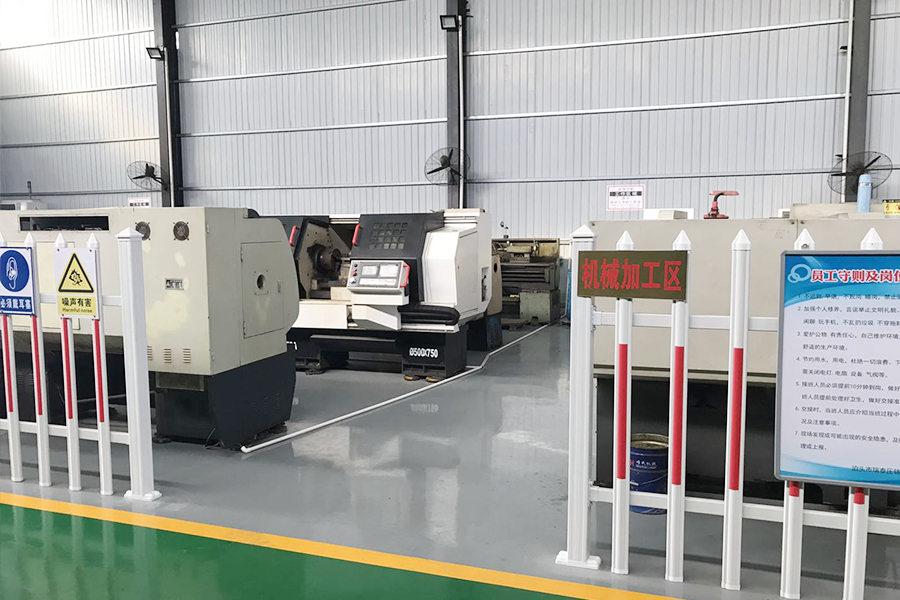
Once the design is frozen, the die goes into build. Expect a few weeks for machining, heat treatment, and assembly. Then come trial shots, where the process parameters get dialed in. The first article inspection is the formal checkpoint: every critical dimension measured, and the report sent to you for approval. Do not rush this step. Approving a sample that misses a critical tolerance commits you to a die that needs modification later, which is expensive and slow.
Mass Production and Process Control
After approval, production runs in batches. Good manufacturers track process parameters for every shot, injection pressure, temperature, cycle time, and check critical dimensions at regular intervals. They keep records you can review. They also manage the tricky middle ground of keeping quality consistent while meeting your delivery schedule. Ask about their sampling frequency and what triggers a process adjustment or a full stop. The answer tells you how seriously they take consistency. For long-running projects, agree on how engineering changes will be handled before they happen, including who approves them and how the die gets modified.
Cost Drivers in Custom Projects
Custom die casting pricing has three layers: tooling, piece price, and finishing. Tooling is a one-time cost driven by size, complexity, and cavity count. The piece price is driven by material, cycle time, and post-casting operations. Finishing is driven by the specification: powder coating is economical, plating and anodizing cost more, and any masking multiplies the labor. Watch out for features that quietly inflate all three: tight tolerances, deep machining, complex finishes, and low-volume orders that still demand full documentation. The best way to control cost is to make trade-offs visible. Ask the supplier to quote the part at two or three tolerance levels and two or three finish levels, so you can see what each requirement actually costs and decide where to compromise.
Documentation and Support
Professional suppliers provide more than parts. You should get material certificates, inspection reports, and, if needed, full PPAP-style documentation for automotive work. After delivery, a real partner answers questions about assembly, finishing, and field issues. Many custom projects evolve over time, a bracket grows a boss, a housing changes a connector opening, and a supplier with engineering support makes those revisions painless. That ongoing relationship is often worth more than the initial price difference.
References
ISO 9001:2015, Quality management systems — Requirements.
North American Die Casting Association, Product Specification Standards for Die Castings.
ASTM International, ASTM B85/B85M, Standard Specification for Aluminum-Alloy Die Castings.
ISO 8062-3:2007, Geometrical product specifications — Dimensional and geometrical tolerances for moulded parts.
ASM International, ASM Handbook, Volume 15: Casting.






Botou Ruitai Die Casting Co., Ltd.
Copyright © 2026-202 https://www.ruitaidiecasting.com. All Rights Reserved Botou Ruitai Die Casting Co., Ltd.All rights reserved